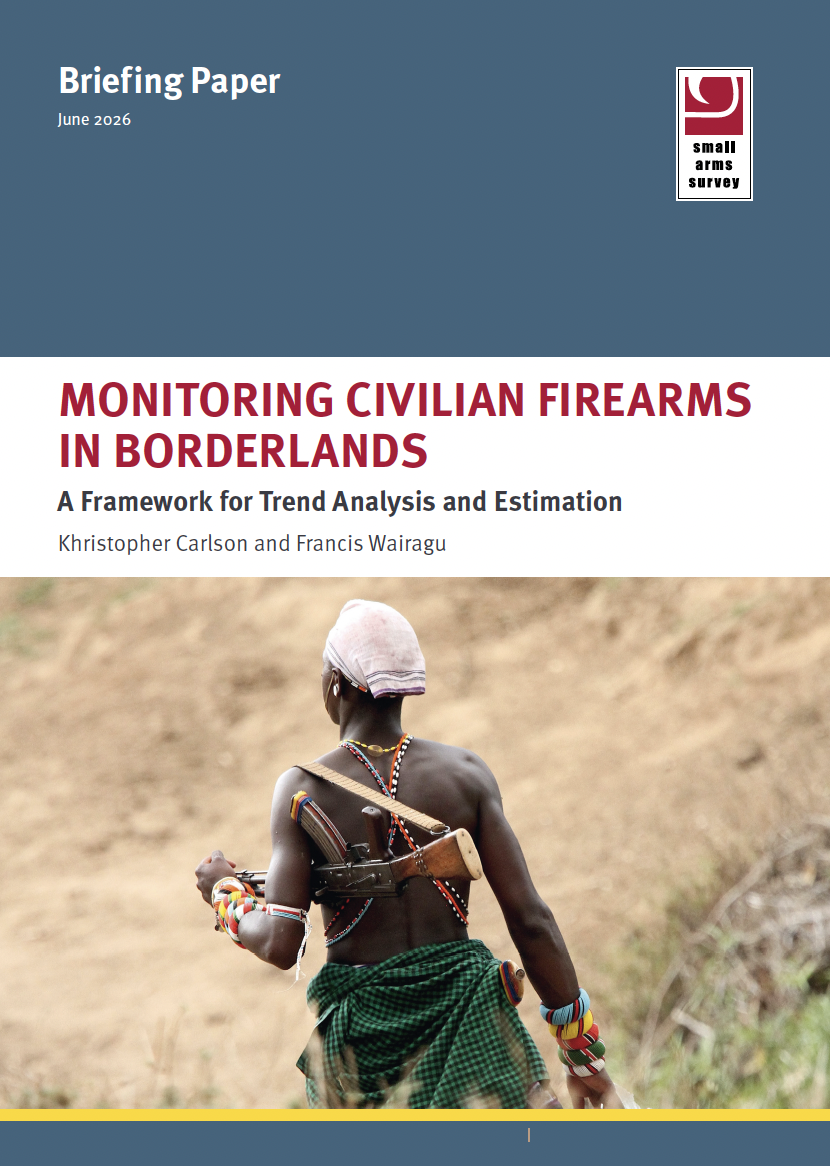
New methodology for tracking civilian firearms dynamics
Civilian firearms circulation in borderland and peripheral areas is difficult to monitor and quantify. Existing approaches often struggle to capture how firearms move through informal systems over time, particularly in environments shaped by cross-border flows, mobility, and localized security dynamics.
Our new Briefing Paper, Monitoring Civilian Firearms in Borderlands: A Framework for Trend Analysis and Estimation, introduces a practical approach for monitoring directional change in civilian-held firearms. Rather than attempting to count weapons directly, it focuses on identifying local circulation patterns and producing informed estimate ranges grounded in observable indicators.
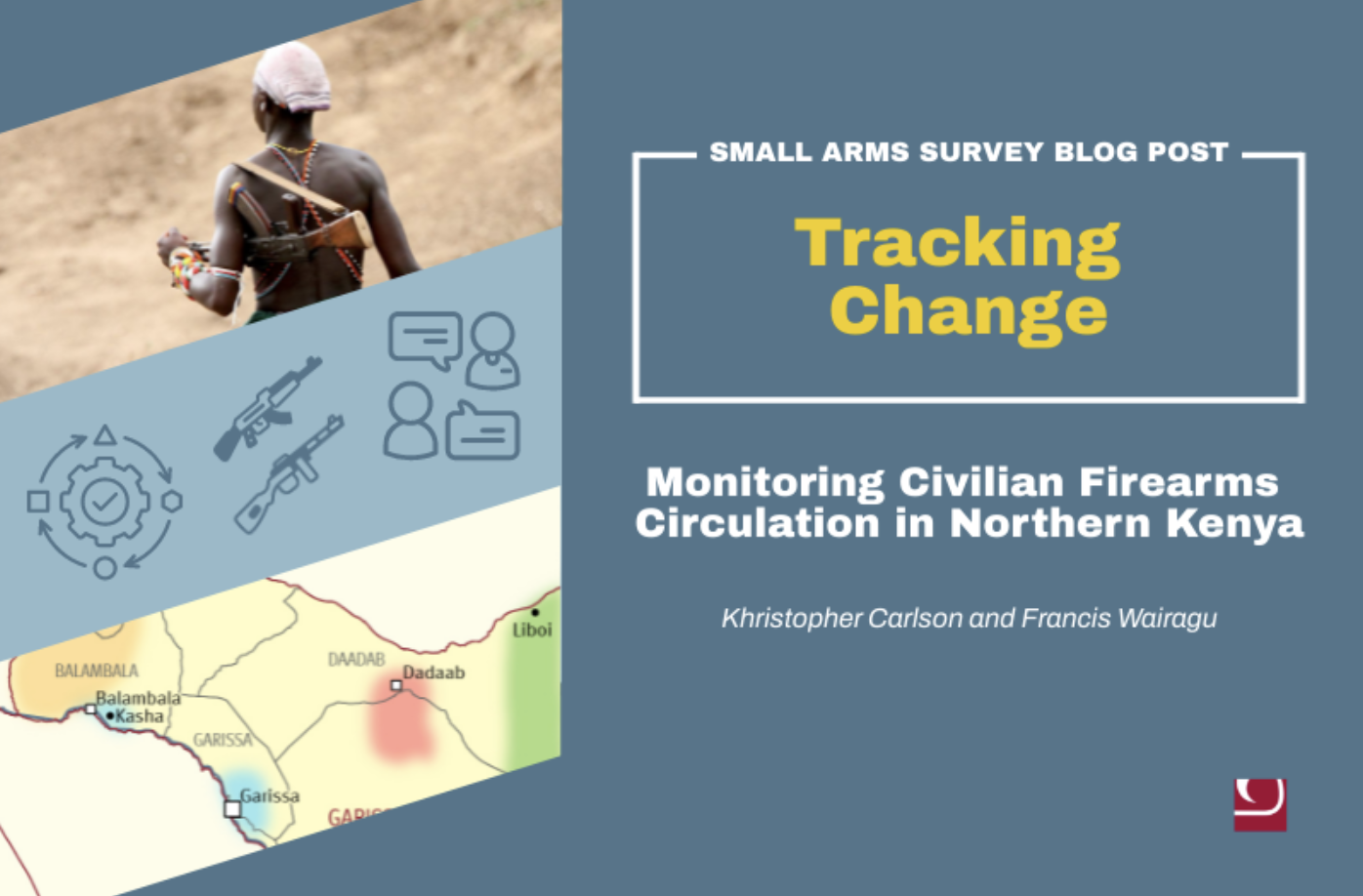
The approach was recently tested in Northern Kenya, as explained in this related blog post, and is intended to support more adaptive and locally informed responses to civilian firearms dynamics.
Read the Briefing Paper Monitoring Civilian Firearms in Borderlands: A Framework for Trend Analysis and Estimation
Read the blog post Tracking Change: Monitoring Civilian Firearms Circulation in Northern Kenya
For more, check out:
- A History of Outsourced Violence: The Rise of the Rapid Support Forces, Libyan National Army, and Wagner Group (December 2025)
- Civilian Firearm Possession and Safety in Ukraine since the Russian Invasion (December 2025)
- Drivers of Extremist Sympathies: Security, Ideology, and Firearms in Lebanon and Tunisia (September 2025)
- The Regional Profiles of Illicit Small-calibre Ammunition (2015-2021) (June 2025)
- Global Firearms Holdings database