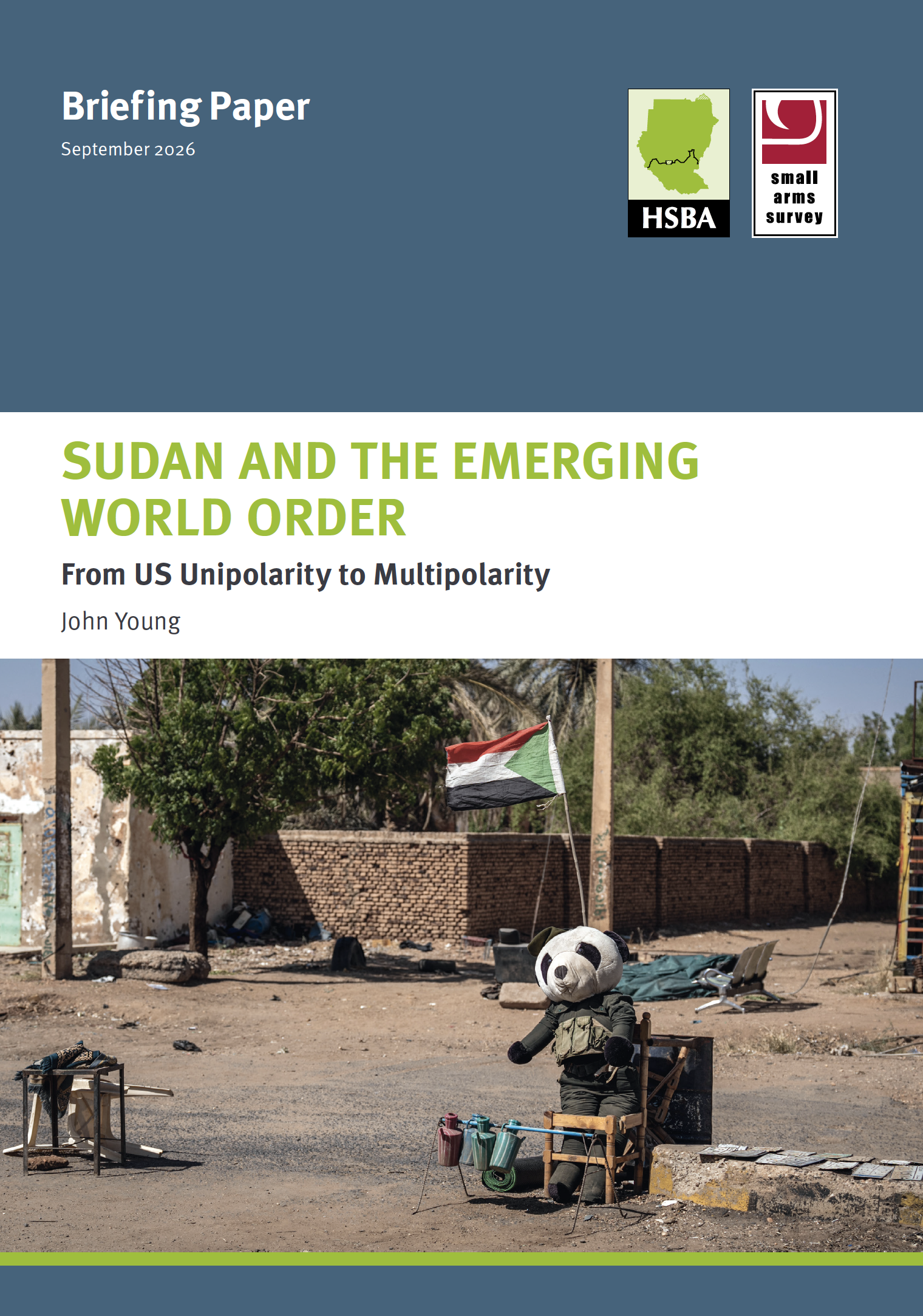
New HSBA Briefing Paper on Sudan, multipolarity, and the limits of US influence
Since the end of the Cold War, US unipolarity gave Washington considerable influence over Sudan’s political trajectory. That relationship has changed. As the world moves towards a more multipolar order, US leverage over Sudan has sharply declined, while Sudan’s military leaders and influential regional states have gained greater latitude to pursue their own interests. The result, this Briefing Paper argues, made ending Sudan’s civil war difficult.
Sudan and the Emerging World Order: From US Unipolarity to Multipolarity—a new Briefing Paper from the Small Arms Survey’s Human Security Baseline Assessment for Sudan and South Sudan project—examines the changing role of the US in Sudan from the post-Cold War period to the present, including the effects of US unipolarity, the consequences of the shift towards multipolarity, and how the current administration’s efforts to reassert US power in an international order in which Washington’s ability to shape political outcomes has diminished.
Read: Sudan and the Emerging World Order: From US Unipolarity to Multipolarity
For more, check out:
- Arsenal Upgrades: MANPADS, the RSF, and the War in Sudan (June 2026)—a Briefing Paper that examines the illicit possession of MANPADS by the RSF and assesses the implications of this proliferation for conventional weapons threat mitigation efforts.
- A History of Outsourced Violence: The Rise of the Rapid Support Forces, Libyan National Army, and Wagner Group (December 2025)—a Briefing Paper that analyses the history of outsourced violence in Sudan, and how the resurgence of mercenary economies and transactional alliances in Sudan, Chad, Libya, and the Central African Republic challenges peacebuilding in the region
- The Republic of Kadamol: A Portrait of the Rapid Support Forces at War (January 2025)—a Briefing Paper that offers an insight into RSF recruitment strategies, war aims, and command and control problems
- Persistent Perils: Illicit MANPADS in the MENA Region (April 2024)—a Report that provides an in-depth analysis of the proliferation of MANPADS in North Africa and the Middle East from 2015–23
- The Human Security Baseline Assessment (HSBA) project page
- South Sudan outputs in our Resource Library
Other news from the Survey:
- New HSBA Briefing Paper on MANPADS and the RSF in Sudan
- New Small Arms Survey Annual Report 2025
- New methodology for tracking civilian firearms dynamics
- New blog post on C-IED and the Humanitarian-Development-Peace Nexus
- New HSBA Briefing Paper on the state of the Nuer White Armies of South Sudan
- New Report on small arms proliferation in Ukraine
- New HSBA Situation Update on the war in Western Equatoria and Western Bahr el Ghazal states
- New HSBA Situation Update on the rise and fall of Benjamin Bol Mel
- New Report on firearm-related violence and trafficking in the Caribbean